Ambient Empire
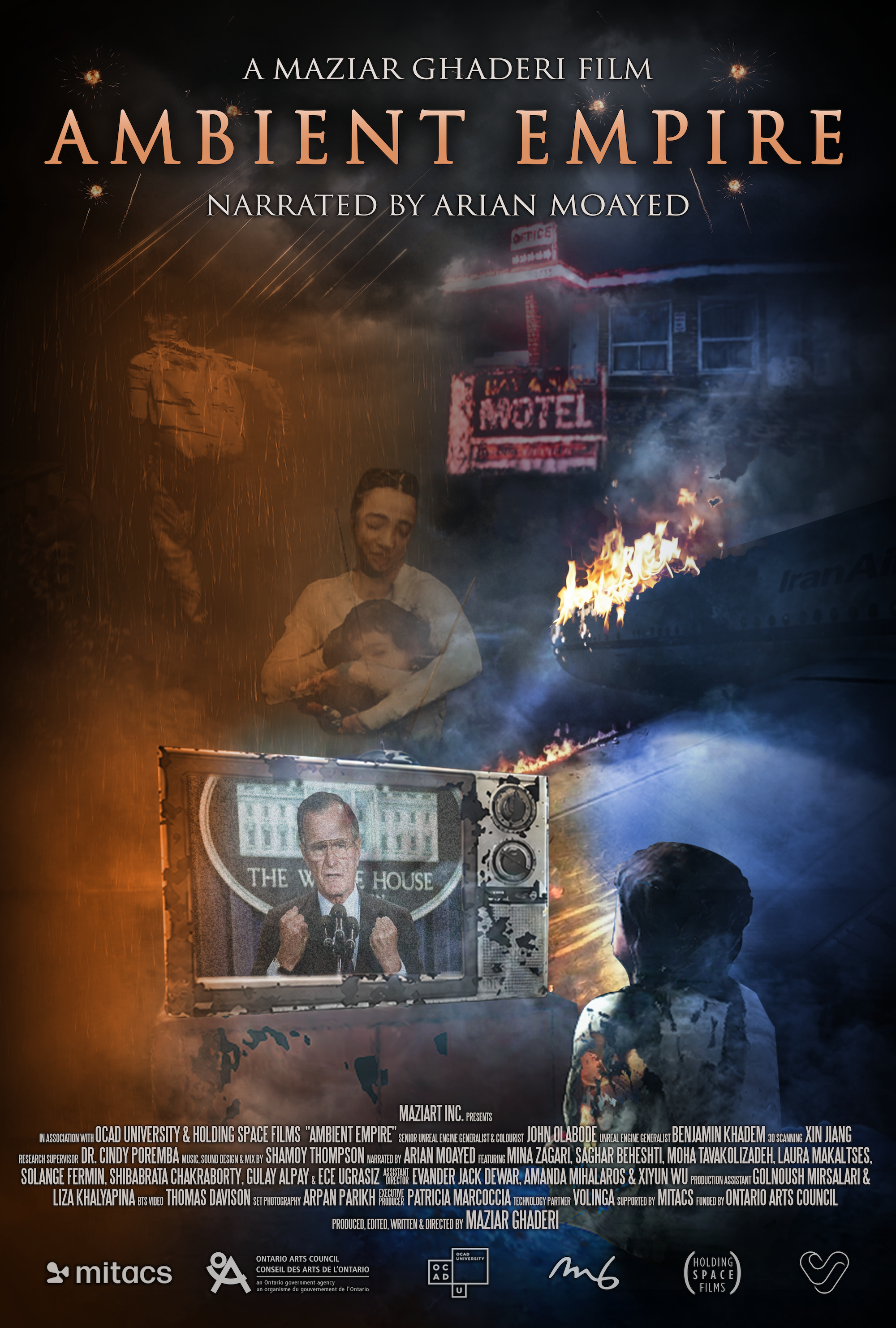
A five-year-old Iranian refugee grows up in a Scarborough motel room, raised by the television of the very empire that displaced him — a hybrid documentary rebuilt from 3D scans of the real motel, revealing how imperial power operates not through spectacle, but through the quiet ambience of what gets said, and what gets left out.
Narrated by two-time Emmy Award nominee and a two-time Tony Award nominee ARIAN MOAYED (Succession, Inventing Anna, Ms. Marvel & Captain America)
director’s statement
I was five years old when my family left Iran and landed in a Scarborough motel room, where we waited for asylum papers while the Iran–Iraq war ended without us. I don't remember the war. I remember the television.
That's the point. For a child, war doesn't arrive as history — it arrives as atmosphere: the tone of the adults, the hum of a screen, a calm voice explaining faraway events in a language you're just learning to love. I was raised, in part, by the broadcast voice of the country that both sheltered my family and helped author our displacement. The summer we arrived, a US Navy cruiser shot down Iran Air 655 — two hundred and ninety people, sixty-six of them children. On our motel TV, it was regrettable, necessary, closed. The lie was never in the words. It was in what got left out.
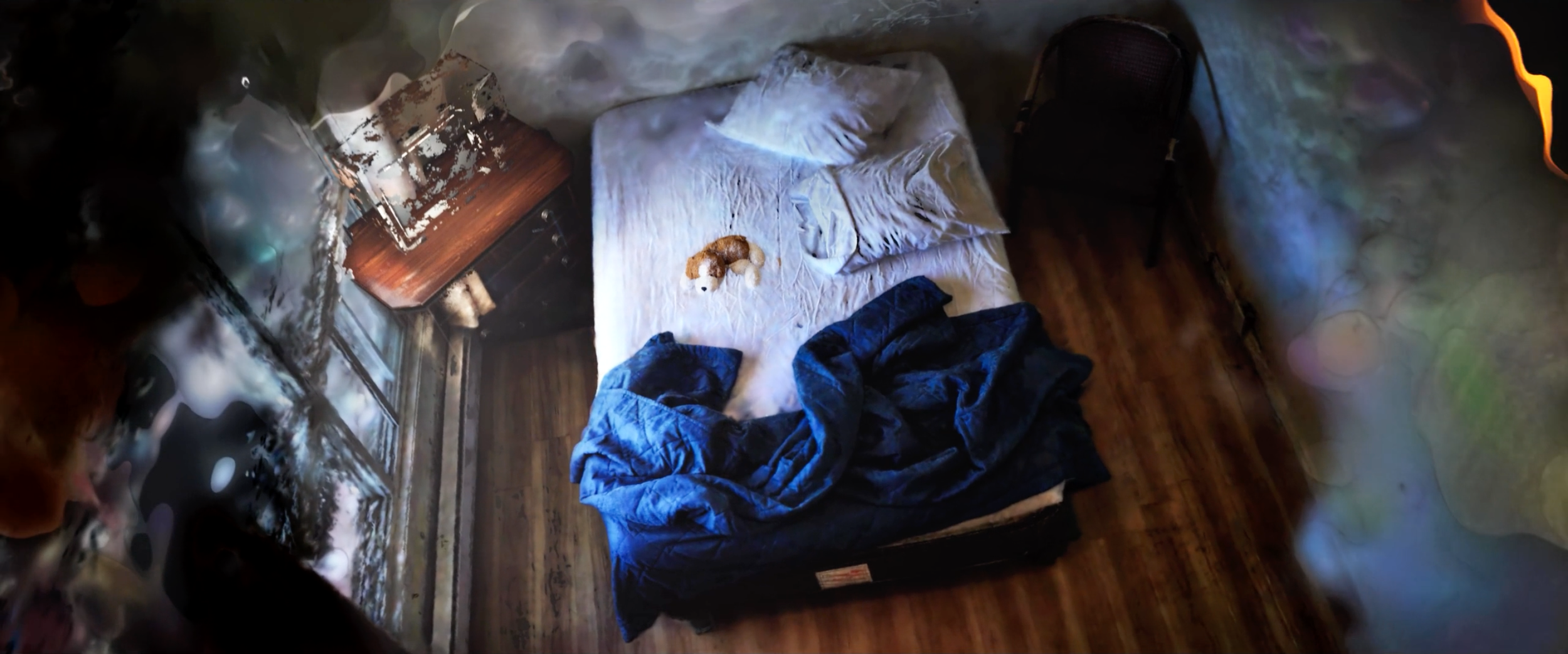
I built the film from the actual room. The motel still stands on Kingston Road, and we scanned it — photogrammetry, LiDAR, Gaussian splatting — with my own family performing as volumetric video inside the reconstruction. The same child plays both my past self and my son, because that is the film's argument in a single body: the loop is real, the voice is still speaking. Memory here glitches and refuses to resolve — not as style, but because that's what displaced memory does.
I finished this film the year the country of my birth and the country of my life went to war again. The film wasn't made for this moment; the moment caught up to it.
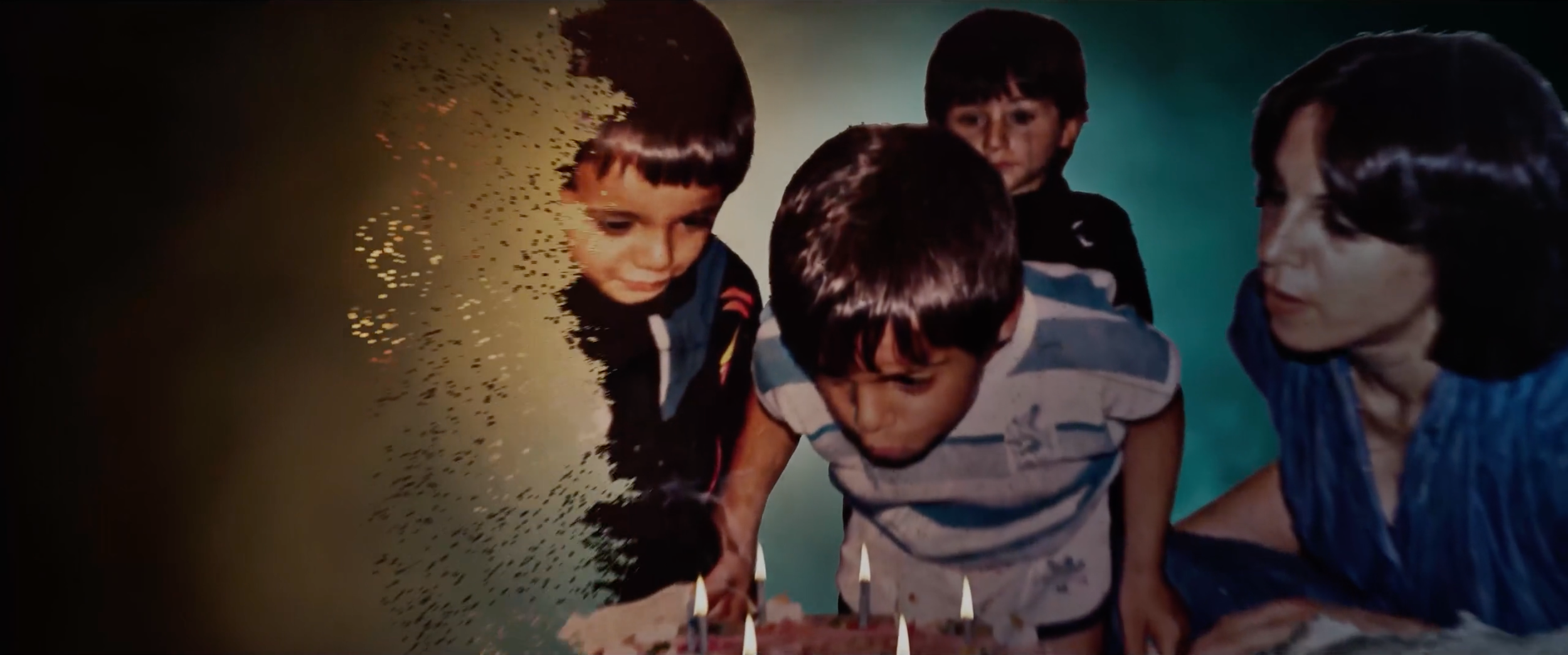
One principle guided everything: no stories about us without us. The film ends on the first faces you'll see in it — my family, looking straight at the camera. We spent forty years as the background of someone else's story. The portrait is what it looks like when we stop.